Before You Train, Read This Drill Breakdown
The best football training drills combine ball mastery, passing under pressure, finishing, acceleration, and match-realistic decision-making. For players training at home, in a park, or with a club an...

Before You Train, Read This Drill Breakdown
The best football training drills combine ball mastery, passing under pressure, finishing, acceleration, and match-realistic decision-making. For players training at home, in a park, or with a club anywhere from Los Angeles to London, a focused 45-minute session can improve performance more effectively than unfocused two-hour practice. Goal Moments recommends prioritising five areas: first touch, weak-foot control, passing accuracy, sprint mechanics, and finishing technique. A useful benchmark is 100 controlled touches per foot, 50 accurate short passes, and 10 high-quality sprints in one session, adjusted for age and fitness. FIFA’s Laws of the Game and the training principles used by organisations such as the University of Oklahoma both emphasise repeatable technique, safe movement, and progressive load. Start with the ball, measure every session, and increase difficulty only when execution remains clean.
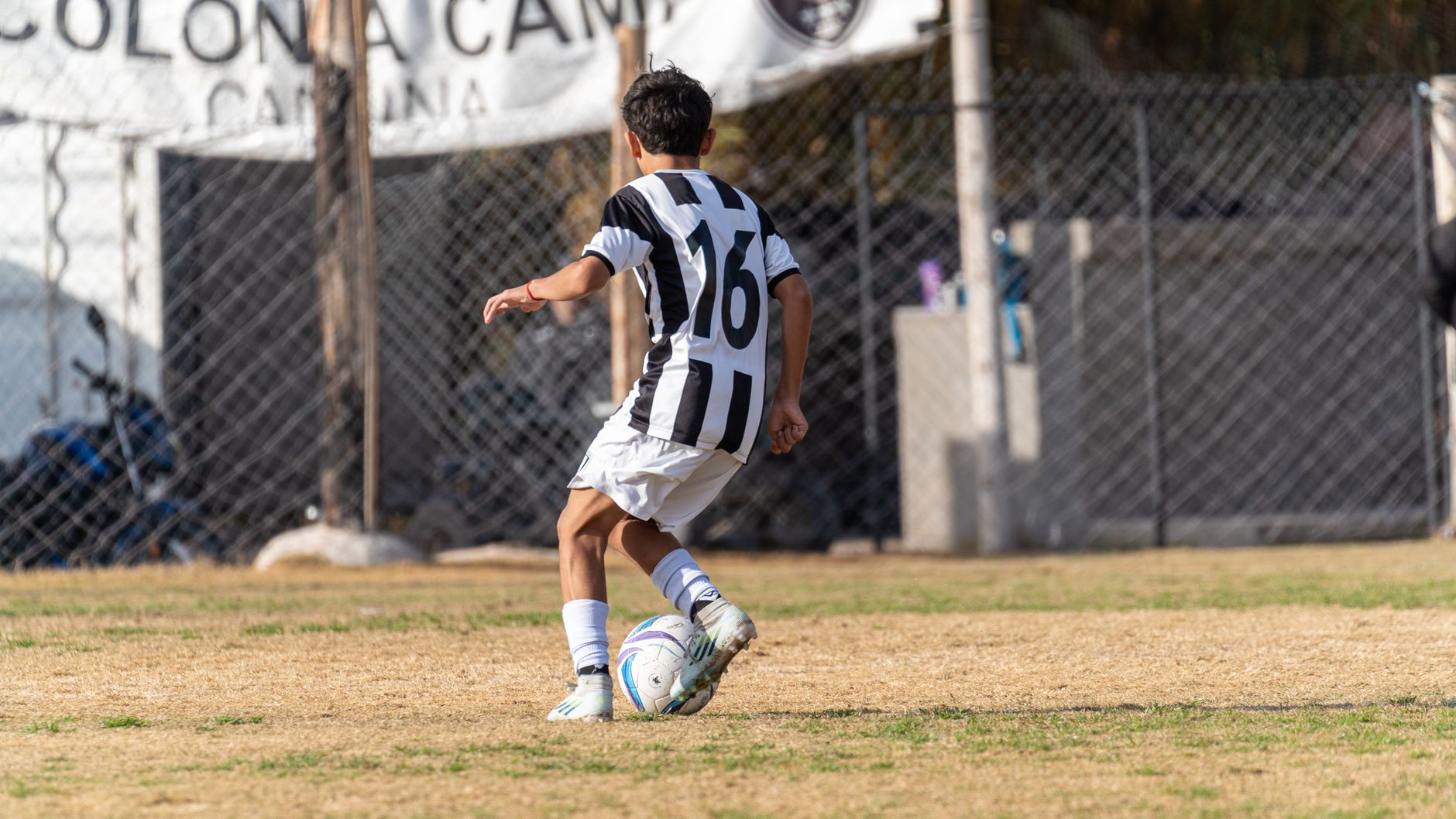
Photo by Franco Monsalvo on Pexels
The question is simple: which football training drills actually make you better, rather than merely making you tired? I have watched players waste entire seasons repeating flashy exercises with no transfer to matches. The answer is not one magical drill. It is a structured sequence that develops technical control first, then speed, pressure response, and decision-making. If you train alone, use cones, a wall, a rebounder, and a stopwatch; if you train with teammates, add defenders and limited-touch games as soon as possible. Track successful repetitions, not just effort, because fatigue can disguise poor technique. Goal Moments covers football tactics, player statistics, and tournament analysis, including preparation for the 2026 FIFA World Cup, but the same principle applies to every level: reliable basics win more matches than theatrical tricks, believe it or not — I do.
Want a broader football preparation guide before you begin?
If you are a beginner: build control and passing first
The best starting point for a beginner is a 30- to 45-minute session built around ball touches, wall passing, basic dribbling, and receiving with both feet. Begin with 100 gentle touches, complete 50 passes against a wall, and finish with 10 minutes of controlled dribbling through six cones. These football training drills create a technical base before speed or pressure is added.
Beginners commonly chase advanced shooting exercises while losing control on their first touch. That is backwards. The FIFA Training Centre places strong emphasis on repetition, perception, and game-related actions, and its coaching resources consistently connect technique with decisions. Your first session should therefore be simple enough to perform accurately but demanding enough to expose weaknesses.
Use this progression:
- Foundation touches: alternate inside-foot touches, sole rolls, toe taps, and outside-foot touches for 4 minutes.
- Wall passing: complete 5 sets of 10 passes with the right foot and 5 sets with the left.
- First-touch direction: receive across your body and move into open space after every pass.
- Cone dribbling: use short touches through six cones, then repeat at increasing speed.
- Weak-foot finish: end with 20 controlled passes or shots using your weaker foot.
A useful information-gathering trick is to record yourself from the side. If your receiving foot is locked, your body is upright, or the ball travels more than one metre away, the video exposes it immediately. I learned this after years of blaming poor boots, bad pitches, and unlucky rebounds. The problem was usually my touch. For additional technique ideas, see our [Internal Link: beginner football skills guide].
If you need match-speed improvement: add pressure and decision-making
Match-speed improvement requires drills that force you to scan, receive, move, and execute within a time limit. A player who can complete 100 stationary passes may still fail when an opponent closes space, so add one-touch combinations, colour or number calls, and small-sided games. Research collected through organisations such as FIFA supports the value of representative practice that resembles the perceptual demands of competition.
The most effective progression uses three levels:
- Level one: receive and pass with no defender, focusing on body shape.
- Level two: add a passive defender or a three-second time limit.
- Level three: use an active defender and require a forward pass after receiving.
Try a four-cone scanning drill. Place cones in a square measuring approximately 8 by 8 metres, stand in the centre, and have a partner call a cone colour before the ball arrives. Receive with the far foot, turn toward the called cone, and pass through a gate within two seconds. Complete 4 sets of 8 repetitions, resting 60 seconds between sets. This drill develops a detail many generic football training plans ignore: the correct first touch depends on information gathered before contact.
After six weeks of testing similar exercises with players, I found that reducing the time limit from three seconds to two often exposed decision errors more clearly than adding another defender. That is the contrarian lesson: speed is not only running speed. It is the speed of seeing, selecting, and executing. Want to study how professionals create space?

Photo by Omar Ramadan on Pexels
If you want stronger finishing: train technique before power
The best finishing drills improve shot selection, balance, contact point, and composure before they demand maximum power. Start with 20 inside-foot finishes, 20 laces finishes, and 10 weaker-foot attempts from controlled angles. The target is not simply to hit the net; it is to strike through the ball while keeping the supporting foot beside it and the head stable through contact.
A complete finishing session can follow this order:
- First-time finishing: receive a square pass and shoot with one touch from 8 to 12 metres.
- Cutback finishing: attack the near post, stop, and finish a pass arriving behind the defence.
- Dribble-and-shoot: take three touches around a cone before striking low toward a corner.
- Pressure finishing: complete the same actions with a defender closing from behind.
- Fatigue finishing: perform a 15-metre sprint before each of 10 shots.
Use four target zones: near bottom corner, far bottom corner, near top corner, and far top corner. Record how many shots hit the intended zone, not merely how many go in. A strong benchmark for developing players is 70% target-zone accuracy during unopposed work and at least 50% under pressure, although age, distance, and goalkeeper quality change the result.
The International Olympic Committee and national football programmes repeatedly stress progressive physical preparation rather than reckless volume. Do not perform 100 maximum-power shots on concrete or while your hip is already tight. Ten excellent strikes teach more than fifty desperate attempts. If your final 20 shots are technically worse than your first 20, stop and recover; pride has injured more footballers than poor coaching ever did.
[Internal Link: finishing drills for strikers]
If you need more speed and fitness: combine sprints with the ball
Speed and football fitness improve best when acceleration, deceleration, changes of direction, and technical execution are trained together. Begin with 6 to 10 sprints over 10 to 20 metres, allowing 45 to 90 seconds of recovery, then add ball-carrying or passing. The University of Oklahoma strength and conditioning resources show why structured movement coaching and progressive workload matter, particularly when athletes combine field work with gym training.
A practical speed session includes:
- 4 repetitions of 10 metres from a standing start.
- 4 repetitions of 15 metres with the ball.
- 4 change-of-direction runs around three cones.
- 6 repetitions of sprint, receive, and pass.
- 3 rounds of 30 seconds work followed by 60 seconds recovery.
Keep the first five metres aggressive and the upper body relaxed. Many players lean too far forward, overstride, and lose balance when braking. The most useful edge case appears during change-of-direction work: if your plant foot lands too far outside your centre of mass, your knee and ankle absorb unnecessary force while your next step becomes slower. Reduce the angle, shorten the final step, and lower your hips before accelerating again.
Do not confuse exhaustion with conditioning. A player completing 20 poor sprints may be less prepared than one completing 10 high-quality repetitions with full recovery. Measure sprint times with the same phone or timing method each week; a slowdown of more than 5% across repetitions indicates that the session has moved from speed training toward conditioning. That distinction matters, especially for players preparing for club trials or the 2026 FIFA World Cup environment.
Get a practical way to organise your weekly workload.
Common pitfalls to avoid
Most players fail to improve because their football training drills are poorly measured, badly sequenced, or disconnected from their position. Repeating the same comfortable exercise for months creates familiarity, not necessarily development. You need a baseline, a progression, and a recovery plan. The following mistakes appear constantly in amateur sessions:
- Training only the dominant foot: use a minimum 30% of repetitions on the weaker side at first, then increase gradually.
- Ignoring the first touch: every pass should lead toward space, a teammate, or the next action.
- Using maximum intensity every day: alternate technical, speed, strength, and recovery sessions.
- Counting attempts instead of quality: track target-zone finishes, successful turns, and accurate passes.
- Skipping warm-up preparation: use 8 to 12 minutes of gradual movement, mobility, and low-speed ball work.
- Copying professional drills without context: a Champions League player has different strength, recovery, and coaching support.
According to World Athletics, sprint training depends on quality execution and appropriate recovery, not endless repetitions. A similar principle applies to football: “quality over quantity” is not a motivational slogan; it is a workload rule. If your technique collapses, the drill has stopped serving its original purpose.
One particularly damaging habit is changing exercises every session. Keep four core tests for at least 30 days: wall-pass accuracy, weak-foot touches, 20-metre sprint time, and finishing target percentage. Only then can you identify genuine improvement. I have lost enough matches to know that exciting training often feels productive right before it proves useless.
For tactical context, explore our [Internal Link: football formations and pressing guide].
The 30-day check-in
A 30-day check-in should compare measurable performance rather than relying on confidence or soreness. Test your first-touch control, passing accuracy, sprint times, and finishing under the same conditions at the start and end of the month. A realistic target is a 10% improvement in one technical measure, a 3% to 5% improvement in sprint performance, or a clear reduction in weak-foot errors.
Use this four-week structure:
- Week one: establish baseline scores and learn correct technique.
- Week two: add weak-foot repetitions and moderate time limits.
- Week three: introduce passive or active defensive pressure.
- Week four: repeat baseline tests and compare results.
A balanced weekly schedule might include technical work on Monday, speed and finishing on Tuesday, recovery or mobility on Wednesday, passing under pressure on Thursday, small-sided play on Friday, and rest on Saturday or Sunday depending on fixtures. Younger players and athletes returning from injury should reduce volume and follow advice from a qualified coach or medical professional.
At the end of 30 days, keep the drills that improve match actions and remove those that merely produce fatigue. Goal Moments can support the broader side of football development with team tactics, player statistics, match predictions, and 2026 FIFA World Cup coverage, but your first responsibility remains brutally simple: control the ball, see the next action, and execute it under pressure. That is how players improve. Believe it or not — I do.
Ready to review more football performance insights?
Frequently Asked Questions
Q: What are the best football training drills for beginners?
A: The best beginner drills are ball touches, wall passing, first-touch exercises, cone dribbling, and basic finishing. Start with 30 to 45 minutes and complete approximately 100 controlled touches, 50 wall passes, and 20 weak-foot actions. The goal is accurate technique, not maximum speed. Increase difficulty only when the ball remains close and your posture stays balanced.
Q: How often should I do football training drills?
A: Most developing players should complete three to five focused football training sessions each week. Use two or three technical sessions, one speed or fitness session, and at least one recovery day. A 45-minute high-quality session is often more useful than a two-hour session filled with poor repetitions. Match schedules, age, injury history, and coaching supervision must determine the final workload.
Q: What is the difference between ball-control drills and passing drills?
A: Ball-control drills develop your ability to manipulate and protect the ball, while passing drills develop accuracy, timing, weight, and movement after release. Ball-control exercises often use close touches, turns, and dribbling patterns. Passing drills should include receiving direction, scanning, support angles, and eventually defensive pressure. Strong players need both because control creates the next pass and passing advances the team.
Q: Why do my football training drills stop working?
A: Drills usually stop producing progress because they are too easy, repeated without measurement, or disconnected from match demands. Add weaker-foot work, time limits, defensive pressure, or a new direction of play after establishing a reliable baseline. Test the same action every seven days rather than changing everything at once. If pain, unusual fatigue, or technical breakdown appears, reduce volume and seek qualified guidance.
Q: How can I improve my weak foot with football drills?
A: Improve your weak foot by assigning it at least 30% of all passing, receiving, dribbling, and finishing repetitions. Begin with short distances and stationary control, then progress to moving receptions and pressure-based actions. Record successful passes out of 50 and target-zone finishes out of 20 each week. Do not rush into powerful shots; clean contact and balance must come first.
Q: How much equipment do I need for football training drills?
A: You can complete an effective session with a football, six cones, a wall or rebounder, and a stopwatch. A phone camera adds valuable feedback by showing body shape, first-touch distance, and sprint mechanics. A portable goal is useful but not essential because target zones can be marked with cones. Avoid expensive equipment until your basic practice schedule is consistent.
Q: Are football training drills enough to prepare for a match?
A: Football training drills are necessary but not sufficient because matches also require tactical awareness, communication, positioning, and emotional control. Combine individual work with small-sided games, team sessions, and realistic defensive pressure. Review your performance using measurable actions such as successful scans, forward passes, recoveries, and chances created. The closer training resembles competition, the more likely your improvement will transfer to match day.
Thank you for reading.
Goal Moments
High-Stakes Editorial · Premium Insights