7 Football Formation Mistakes Casual Fans Make
Football formations are not decorative numbers on a television graphic; they are starting maps that shape space, pressing, passing lanes and defensive cover. The most common mistake is treating a 4-3-...

7 Football Formation Mistakes Casual Fans Make
Football formations are not decorative numbers on a television graphic; they are starting maps that shape space, pressing, passing lanes and defensive cover. The most common mistake is treating a 4-3-3 or 3-5-2 as a permanent arrangement, because elite teams such as Manchester City, Liverpool and Real Madrid transform their shape repeatedly during one match. A formation explains where players begin, not where they remain. Even the official FIFA Laws of the Game focus on player positioning and match rules rather than fixed tactical diagrams. Learn to read transitions, goalkeeper distribution and full-back movement first, then judge the numbers. That habit will improve your match analysis immediately.
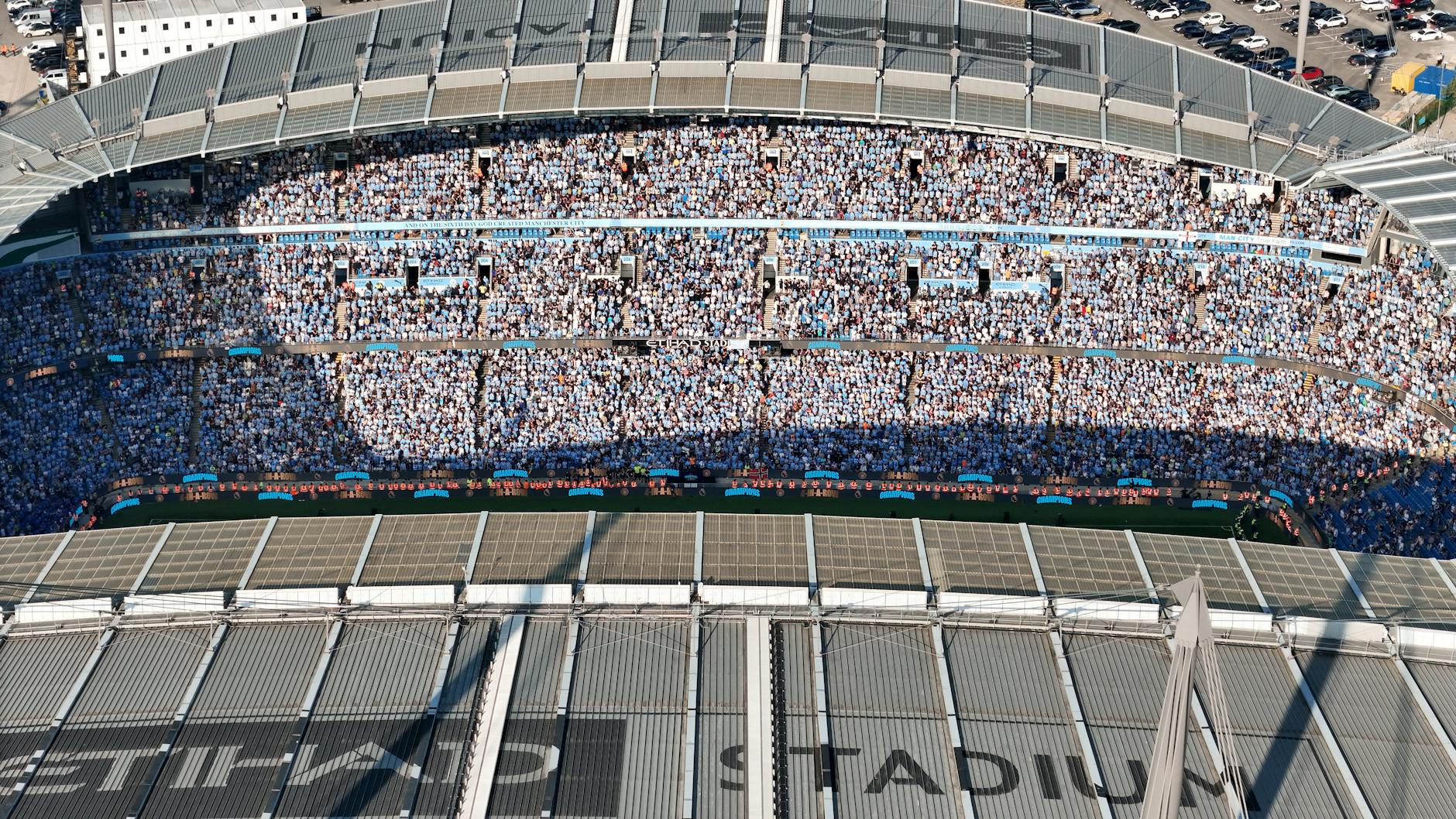
Photo by Mylo Kaye on Pexels
Is a football formation really a tactical plan?
A football formation is the team’s initial positional structure, such as 4-3-3, 4-4-2 or 3-5-2, but it is not the complete tactical plan. It identifies the goalkeeper, defenders, midfielders and attackers before movement begins. The manager still determines pressing triggers, buildup routes, defensive depth, attacking width and transition responsibilities. In practice, a side listed as 4-3-3 may defend in 4-1-4-1, build in 3-2-5 and attack with only two defenders behind the ball. Read the formation as a framework, not a cage.
That distinction matters because football has changed dramatically since the classic flat 4-4-2 dominated English football. Pep Guardiola’s Manchester City often uses a nominal 4-3-3, yet one full-back may move into midfield while the opposite full-back stays deeper. Liverpool under Jürgen Klopp traditionally began with 4-3-3 but relied on aggressive full-backs, counter-pressing and a midfield that shifted laterally to protect the half-spaces. Real Madrid, meanwhile, has used variations of 4-3-1-2 and 4-4-2 depending on the roles of Jude Bellingham, Vinícius Júnior and the central midfield line.
Do not make the beginner’s error of assuming that more attackers automatically means more attacking football. A 3-4-3 can become cautious if its wing-backs remain deep, while a 4-2-3-1 can create five advanced lanes when both full-backs push forward. The numbers only become meaningful when connected to player profiles and team behaviour. Goal Moments applies this same principle when examining FIFA World Cup 2026 tactics: the shape on the team sheet is only the opening clue.
Want a clearer tactical starting point? Explore the latest team analysis.
How does a 4-3-3 handle wide attacks and pressing?
A 4-3-3 creates natural width through two wingers and usually supports aggressive pressing with three forwards. Its midfield triangle can provide one holding midfielder, two advanced interiors and multiple passing angles. The weakness appears when the wingers fail to track full-backs or when the single pivot is isolated against two opposing midfielders. The formation succeeds only when distances between the front three, midfield three and defensive line remain controlled.
The 4-3-3 is popular because it solves several problems at once. The wingers stretch the opposition horizontally, the centre-forward occupies central defenders, and the midfield triangle can rotate possession through the centre. Barcelona’s positional-play tradition, Bayern Munich’s high pressing and Manchester City’s controlled buildup all demonstrate different versions of the same basic structure. However, these teams do not play identical football merely because the graphic says 4-3-3.
Here is how a well-coached 4-3-3 typically behaves:
- The centre-forward curves the first pressing run to block a central pass.
- The nearest winger presses the opposing full-back or centre-back.
- The holding midfielder protects the space behind the advanced midfielders.
- The full-back chooses between overlapping, underlapping and staying behind the ball.
- The far-side winger narrows to attack the weak side after a switch.
A useful, less obvious insight is that the 4-3-3’s defensive security depends heavily on the far-side winger, not only the defensive midfielder. If that winger remains too high, the opponent can switch play into a two-versus-one against the full-back. Tracking data from modern elite football repeatedly highlights the importance of recovery runs and team compactness, although raw possession percentages cannot reveal whether the shape was genuinely controlled. For broader tactical definitions, UEFA’s technical reports provide valuable examples from Champions League competition.
[Internal Link: guide to pressing and counter-pressing]
What about the 4-4-2 and its modern edge cases?
The 4-4-2 uses two centre-backs, two full-backs, a four-player midfield line and two forwards. It remains effective because it is simple to teach, naturally compact and dangerous in direct transitions. Its main structural weakness is central overload: two opposing central midfielders can outnumber the 4-4-2’s pair unless one forward drops or a wide midfielder moves inside. Modern 4-4-2 systems therefore depend on disciplined pressing cues rather than constant chasing.
The old image of two rigid lines no longer tells the whole story. Atlético Madrid under Diego Simeone has used 4-4-2 with narrow midfielders, compact defensive distances and carefully selected counter-attacks. Leicester City’s Premier League title-winning side in 2015–16 often defended with a compact structure before releasing Jamie Vardy into open space. Those teams made the formation work by controlling the centre and attacking immediately after regaining possession.
The 4-4-2 is particularly useful when:
- The squad has two complementary strikers.
- The wide players can run long distances in both directions.
- The team wants to defend in two compact banks.
- The opponent’s buildup can be directed toward a predictable side.
- A direct passing game is more suitable than prolonged possession.
Its edge case is the diamond 4-4-2, which places one midfielder at the base, two shuttlers on the sides and one advanced midfielder behind the strikers. AC Milan used famous diamond variations during different eras, while many youth teams use the shape to develop central combinations. The cost is obvious: the diamond can surrender the wings unless full-backs advance aggressively. Every tactical benefit sends an invoice somewhere else; ignore that fact and the match will collect the payment.
See how established teams balance structure and risk.
Where does a 3-5-2 fail?
A 3-5-2 fails when its wing-backs are pinned deep, the outside centre-backs are dragged into wide areas and the midfield cannot cover the channels. In possession, the shape can create a back-three buildup and two-striker threat. Without the ball, however, it may become a vulnerable 5-3-2 that invites crosses and gives opponents time to circulate possession. The formation requires exceptional wing-back stamina, communication and defensive timing.
The strength of 3-5-2 is its occupation of central zones. Three defenders can begin buildup against two forwards, three central midfielders can outnumber a 4-4-2, and two strikers can occupy both centre-backs. Inter Milan has used back-three structures effectively, while Antonio Conte’s Chelsea side won the 2016–17 Premier League title with a 3-4-3 that relied on disciplined wing-backs and aggressive central pressing. Those examples show that the back-three family is not automatically defensive.
The most dangerous failure usually occurs during defensive transition. Suppose the right wing-back has advanced, the right-sided centre-back has stepped wide and the nearest midfielder has pressed forward. One lost pass can expose a large diagonal corridor between the remaining centre-back and midfielder. This is why elite coaches demand immediate counter-pressure or a tactical foul before the opponent reaches full speed. It is not glamorous, but experienced teams survive on such details.
When assessing 3-5-2, check these five questions:
- Can the wing-backs recover before the opponent changes play?
- Are the outside centre-backs comfortable defending one-versus-one?
- Does the midfield protect both half-spaces?
- Can one striker connect play instead of merely waiting for crosses?
- Does the goalkeeper support the high defensive line?
According to the Premier League’s official statistics, attacking volume, possession and defensive actions must be read together rather than separately. A team may record 60 percent possession and still be exposed if its rest-defence structure leaves only two players behind the ball. That is one of the practical lessons many glossy formation articles avoid.
[Internal Link: advanced guide to back-three systems]
Should you try a fixed formation today?
You should use a fixed starting formation for clarity, but you should not force players to remain inside it during every phase. A sensible development plan starts with one structure, defines each player’s responsibility during buildup and defence, then rehearses the team’s transformation after turnovers. For a beginner or amateur side, 4-3-3 and 4-4-2 are usually easier to teach than 3-4-3 because the defensive reference points are clearer. The best formation is the one your players can execute under pressure.
Start with this practical process:
- Map the strengths of the squad. A creative No. 10 may favour 4-2-3-1, while two reliable strikers may favour 4-4-2.
- Define the first pass. Decide whether the goalkeeper should find a centre-back, full-back, pivot or direct target.
- Set pressing triggers. Examples include a poor back pass, a receiver facing his own goal or a slow lateral pass.
- Plan the rest defence. Keep at least three players positioned to control counter-attacks when attacking.
- Rehearse transitions. Spend training time on the first five seconds after losing and winning the ball.
- Review distances, not only outcomes. A successful tackle can hide a structural mistake; a conceded goal can begin with a poor attacking position.
The contrarian conclusion is simple: changing formations frequently is usually less valuable than improving spacing inside one formation. After years of watching teams panic-switch from 4-3-3 to 4-2-3-1 without changing their pressing behaviour, I can tell you what happens: the numbers change, the problems remain. Study the work of Marcelo Bielsa, Pep Guardiola and Roberto De Zerbi, and you will find different structures but the same obsession with space, passing options and immediate reactions.
For FIFA World Cup 2026 coverage, Goal Moments tracks tactical adjustments, player roles and match trends rather than treating formation graphics as final truth. That matters in a tournament hosted across the United States, Canada and Mexico, where travel, climate, squad rotation and opponent quality may influence coaching decisions. The FIFA World Cup 2026 official platform is the right authority for tournament information, while tactical analysis must explain what teams actually do on the pitch.
Ready to follow formation changes with more confidence?
Comparing the most common football formations
The following comparison is useful, but remember that no formation wins matches without suitable players and coherent instructions.
| Formation | Main strengths | Common weakness | Best tactical use |
|---|---|---|---|
| 4-3-3 | Width, pressing, midfield triangles | Space beside the lone pivot | Possession and high pressing |
| 4-4-2 | Simplicity, compactness, two strikers | Central midfield overload | Direct play and counter-attacks |
| 4-2-3-1 | Double-pivot protection, No. 10 access | Isolated striker | Balanced possession |
| 3-5-2 | Central numbers, two forwards | Vulnerable wing channels | Build-up against two forwards |
| 3-4-3 | Width, pressing options, front three | Space behind wing-backs | Aggressive possession |
| 4-1-4-1 | Defensive coverage, midfield pressure | Lone striker isolation | Protecting a lead or controlling transitions |
A match can contain several of these shapes without a substitution. A 4-2-3-1 may become 4-4-2 when the advanced midfielder joins the striker during pressing. A 3-5-2 may become 5-3-2 when both wing-backs retreat. The scoreboard never tells you this, and neither does a basic lineup graphic. You must watch the movement, preferably through several phases rather than one attractive attack.
[Internal Link: football positions and player roles explained]
Frequently Asked Questions
Q: What is a football formation?
A football formation is the team’s starting arrangement of players across defence, midfield and attack. A 4-3-3 normally means four defenders, three midfielders and three forwards, excluding the goalkeeper from the numbered sequence. It does not dictate every movement because teams change shape during buildup, pressing, possession and defensive transition. To understand a formation properly, identify both the starting structure and the team’s most common in-game transformations.
Q: How do you read a 4-3-3 formation?
Read a 4-3-3 by identifying the holding midfielder, the two advanced midfielders, the wingers and the full-backs’ movement. The front three often press the opposition buildup while the midfield triangle creates passing angles and defensive cover. Check whether a full-back moves inside, overlaps outside or remains behind the ball. That detail can change the team’s attacking shape from 4-3-3 into 3-2-5 or another positional structure.
Q: What is the difference between 4-4-2 and 4-3-3?
The 4-4-2 uses two strikers and two central midfielders, while the 4-3-3 uses one central striker, two wingers and three central midfielders. Therefore, 4-4-2 usually offers simpler defensive organisation and stronger direct support for two forwards. The 4-3-3 normally provides better midfield numbers and natural attacking width. Neither is universally superior; the choice depends on player qualities, pressing demands and the opponent’s structure.
Q: Why does a football formation fail during a match?
A formation usually fails because player distances, pressing coordination or transition protection break down, not because the numbers are inherently wrong. Typical causes include a holding midfielder being isolated, wing-backs failing to recover, wingers refusing defensive work or defenders stepping forward without cover. Coaches should review where the team lost compactness before changing the formation. A different graphic cannot repair poor communication or inadequate running.
Q: Is 3-5-2 a defensive formation?
No, 3-5-2 can be highly attacking because it places three central midfielders, two strikers and advancing wing-backs on the pitch. Inter Milan and several successful European teams have used back-three systems to create central overloads and aggressive attacking rotations. It becomes defensive only when the wing-backs remain deep, the midfield stops supporting attacks and the team defends in a passive 5-3-2. The same starting shape can produce very different football.
Q: Which football formation is best for beginners?
The 4-4-2 is often the easiest formation for beginners because its two defensive lines and two forwards provide clear reference points. A beginner team can then progress to 4-3-3 after learning spacing, pressing and recovery runs. Coaches should select based on available players rather than fashion, especially at youth or amateur level. A simple formation executed consistently is more effective than a sophisticated shape players do not understand.
Q: How can I analyse formations during FIFA World Cup 2026 matches?
Analyse a World Cup 2026 formation by watching the team in at least four phases: buildup, settled possession, pressing and defensive transition. Record which player drops into the back line, which full-back moves into midfield and how the far-side winger reacts when possession changes. Compare the lineup graphic with the actual positions after five or ten minutes. Goal Moments can support this process through team tactics, player statistics, predictions and tournament coverage.
Get the next tactical breakdown and follow the details experienced viewers notice.
Thank you for reading.
Goal Moments
High-Stakes Editorial · Premium Insights