Why the 2026 World Cup Redefines Football
The 2026 FIFA World Cup expands international football to 48 teams, 104 matches, 16 host cities, and three host countries: Canada, Mexico, and the United States. The tournament runs from June 11 to Ju...

Why the 2026 World Cup Redefines Football
The 2026 FIFA World Cup expands international football to 48 teams, 104 matches, 16 host cities, and three host countries: Canada, Mexico, and the United States. The tournament runs from June 11 to July 19, 2026, opening at Estadio Azteca in Mexico City and concluding at MetLife Stadium in the New York–New Jersey region. FIFA’s new format creates 12 groups of four teams, with the top two from each group and the eight best third-place teams advancing to a 32-team knockout stage. This means more nations, more travel, and a longer competition than the 2022 Qatar World Cup, which featured 32 teams and 64 matches. Goal Moments will track fixtures, team tactics, player statistics, predictions, and daily tournament developments across North America. Start by mapping the host cities against your preferred teams, match dates, and realistic travel budget before making any plans.
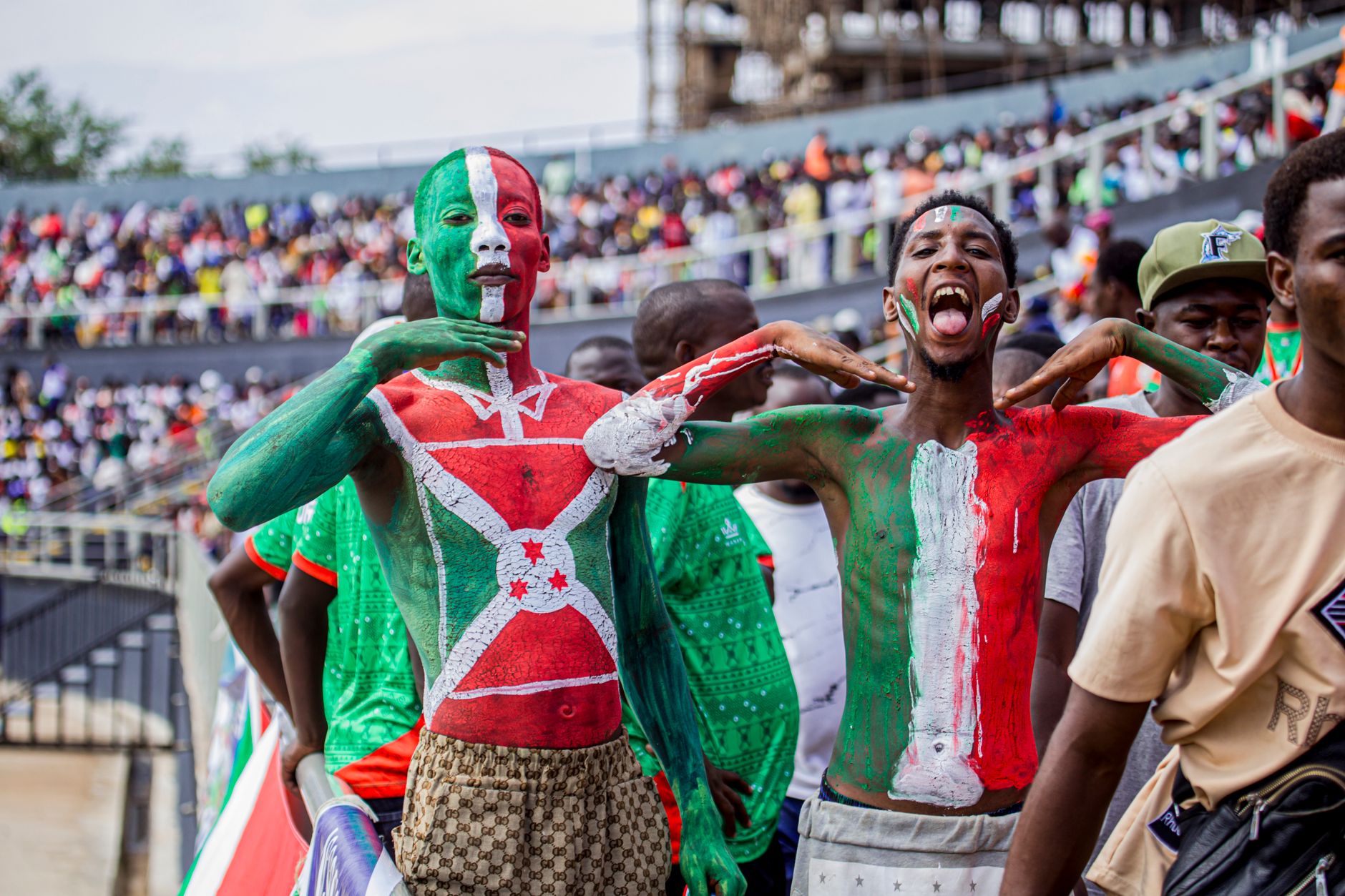
Photo by Chris wade NTEZICIMPA on Pexels
The Bottom Line
The 2026 World Cup will be the largest FIFA men’s World Cup ever staged, and the decisive change is not merely the number of participating teams. The tournament’s geography forces supporters, broadcasters, coaches, and analysts to think differently because matches will be spread across Canada, Mexico, and the United States, covering six time zones and immense travel distances. FIFA selected Toronto, Vancouver, Mexico City, Guadalajara, Monterrey, Atlanta, Boston, Dallas, Houston, Kansas City, Los Angeles, Miami, New York–New Jersey, Philadelphia, San Francisco Bay Area, and Seattle as host markets, creating a competition with radically different climates and football cultures. According to FIFA’s official tournament information, the competition will include 104 fixtures rather than the 64 played in Qatar. That extra volume creates stronger opportunities for tactical trends to emerge, but it also makes careless predictions even more dangerous. I have watched enough tournaments collapse under bad assumptions to know that surface-level form is worthless without context, believe it or not — I do.
For supporters, the central issue is planning. A fan following England, Brazil, or Argentina may assume that several matches can be attended in one trip, yet the distance between host cities can make that plan expensive and exhausting. Mexico City to Monterrey is manageable compared with Vancouver to Miami, while Los Angeles to New York–New Jersey involves a major cross-country journey. Match times will also be adapted for television audiences and local conditions, meaning a European viewer may face early-morning or late-night kickoffs. The practical lesson is simple: treat the 2026 World Cup as a regional tournament network, not as one compact event. Review the [Internal Link: complete 2026 World Cup fixture guide] before choosing tickets, accommodation, or travel routes.
What Players Actually See
The 2026 World Cup gives players a tournament defined by deeper squads, longer recovery demands, and unfamiliar environmental changes between venues. Teams may move from Mexico City’s altitude to coastal humidity in Miami or Monterrey’s heat, then travel to cooler northern cities such as Vancouver or Toronto. Those conditions can affect pressing intensity, hydration, recovery time, set-piece concentration, and substitutions. The 48-team format also changes qualification pressure: a strong opening match remains valuable, but one defeat is less likely to eliminate a team immediately because 32 nations reach the knockout phase. Coaches therefore need to balance aggressive group-stage football with the physical reality of a 39-day event. The International Football Association Board Laws of the Game remain the technical foundation, but tournament management will decide many outcomes.
At least three player-level factors deserve close attention:
- Travel recovery: Long flights and time-zone changes can reduce preparation quality, particularly for teams with matches in different regions.
- Altitude and heat: Mexico City sits at roughly 2,240 metres above sea level, while several American host cities present intense summer heat and humidity.
- Squad rotation: The expanded schedule rewards teams capable of using 18 to 20 trusted players rather than depending on one starting eleven.
A specific edge case is often ignored: a team can dominate possession in one city and appear strangely passive in another because pressing triggers become harder to sustain in heat or thin air. That is not always a motivational failure. It can be a measurable physiological problem. Analysts at Goal Moments will therefore compare sprint volume, substitutions, rest days, and venue conditions instead of treating every performance as an isolated statement about quality.

Photo by Digital Buggu on Pexels
The 3 Things That Matter Most
1. How does the 48-team format change qualification?
The 48-team format creates 12 groups of four, with 32 teams progressing to the knockout phase through group rankings and third-place qualification. This reduces the immediate elimination risk of one poor result, but it increases the importance of goal difference, discipline, and final-group calculations because eight third-place teams must be compared across all groups. FIFA’s official competition regulations will determine the precise ranking procedures, including points, goal difference, goals scored, and disciplinary criteria. The format is more forgiving at the beginning and more unforgiving at the end, where small statistical margins can decide advancement.
The group stage should produce several strategic contrasts. Elite teams may rotate earlier if two victories secure qualification, while mid-ranked teams could attack more aggressively because a third-place route remains available. However, assuming that third place is automatically safe would be foolish. A narrow defeat followed by two draws may leave a team vulnerable to goal difference, especially if another group produces several high-scoring victories. This is where many casual predictions fail: they identify the famous teams but ignore the ranking mathematics. Keep a live table rather than relying on memory, and check official FIFA updates after every matchday.
The knockout stage then becomes familiar in structure but heavier in workload. Thirty-two teams means a round of 32, followed by the round of 16, quarter-finals, semi-finals, and final. That additional knockout round creates more opportunities for surprise results, but it also makes depth more important than reputation. A talented team with weak substitutes may survive the group stage and still unravel across four elimination matches.
2. Which host cities influence the football experience?
The host cities influence the tournament through stadium design, climate, transport, local football culture, and travel distance. Estadio Azteca in Mexico City offers historic significance and altitude; Guadalajara and Monterrey add distinct Mexican football environments; Toronto and Vancouver provide Canada’s two host markets; and American venues such as Mercedes-Benz Stadium in Atlanta, SoFi Stadium in Los Angeles, Hard Rock Stadium in Miami, and MetLife Stadium near New York create different logistical realities. The United States Soccer Federation and local host committees are responsible for extensive event coordination, but supporters still need to solve their own transport and accommodation problems.
Atlanta is particularly important because Mercedes-Benz Stadium is scheduled to host eight matches, including a semi-final. The venue’s retractable roof and downtown position make it one of the most practical major-market locations, although high demand can sharply raise accommodation prices around knockout fixtures. Los Angeles is also expected to host eight matches, with fan celebrations planned around Exposition Park and the LA Memorial Coliseum area. Meanwhile, the New York–New Jersey region hosts the final, giving MetLife Stadium the tournament’s most commercially visible assignment.
A useful planning method is to divide destinations into clusters:
- Western cluster: Vancouver, Seattle, San Francisco Bay Area, and Los Angeles.
- Central cluster: Guadalajara, Mexico City, Monterrey, Dallas, Houston, and Kansas City.
- Eastern cluster: Toronto, Atlanta, Miami, Philadelphia, Boston, and New York–New Jersey.
This clustering does not eliminate long journeys, but it prevents the rookie mistake of booking consecutive matches in cities that look close on a map and are not close in practice. Check airport transfers, rail availability, stadium security rules, and local event restrictions before committing to a schedule. See the [Internal Link: host city and stadium comparison] for a more practical venue-by-venue breakdown.
Want a clearer way to compare venues, match conditions, and tournament routes? Use the latest planning resources from Goal Moments.
3. Why will tactics and player data matter more?
Tactics and player data matter more because the expanded field produces greater variation in playing styles, while the tournament schedule increases the cost of physical mistakes. Possession percentage alone will not explain performance in 2026; analysts should examine field tilt, progressive passes, high turnovers, expected goals, defensive actions, set-piece efficiency, and the distance covered during pressing sequences. Opta Analyst provides widely used football data concepts, but no single metric should be treated as a final verdict. Context remains king, and anyone claiming otherwise has not studied enough failed models.
The most valuable comparison is often between a team’s attacking output and the quality of opposition faced. A side may record 2.1 expected goals per match against weaker regional opponents and then struggle to create chances against a compact top-tier defence. Conversely, a counterattacking team may show modest possession but produce high-quality chances through direct transitions. Goal Moments will focus on tactical matchups, including full-back positioning, midfield spacing, defensive rest shape, and how teams respond after losing the ball.
A practitioner-level insight is to track substitutions by game state rather than by minute alone. A coach who regularly introduces a second striker after falling behind may appear aggressive, but the real question is whether the change improves shot quality or simply creates defensive exposure. Similarly, a winger’s goals may hide declining involvement if the team’s build-up structure no longer reaches the final third. Match predictions should combine recent data, opponent strength, venue, rest, injuries, and likely lineups. Anything less is decorative arithmetic.
Edge Cases & Gotchas
What can make World Cup predictions misleading?
World Cup predictions become misleading when they ignore sample size, travel, lineup uncertainty, weather, and the tournament’s unusual group-stage mathematics. A team’s last five matches may include opponents from very different competitive levels, while friendly fixtures often feature heavy rotation and low tactical intensity. Injuries can also change a team’s identity rather than merely remove one player, particularly when the absent footballer is a goalkeeper, holding midfielder, or primary playmaker. The FIFA World Cup 2026 regulations and confirmed team news should be checked before placing any reliance on a forecast.
Watch for these common traps:
- Overvaluing historical reputation: Previous titles do not guarantee current defensive structure.
- Ignoring travel geography: A team playing in Vancouver and then Dallas faces a different recovery problem from one remaining in a single region.
- Confusing possession with control: A high share of the ball may produce little penalty-area access.
- Treating third-place qualification as automatic: Eight third-place teams advance, but ranking margins can be extremely narrow.
- Using stale lineups: A prediction made before final squad announcements can become obsolete within hours.
The most overlooked edge case is the interaction between kickoff time and local climate. A match played in a covered stadium may reduce direct heat exposure, yet humidity, travel, and pre-match preparation still affect players. Air conditioning can also alter the feel of the surface and ball speed, while a retractable roof may change the atmosphere without creating outdoor conditions. These details rarely appear in simple preview articles, but they can influence tempo during the final 20 minutes. I learned that lesson after losing more wagers than I care to remember; the match does not care how elegant your theory looked at breakfast.

Photo by Lukas Blazek on Pexels
Another difficulty concerns responsible betting and information quality. Football analysis can support understanding, but it cannot remove uncertainty, and no prediction is a guaranteed outcome. Readers using Goal Moments for gambling-related research should verify local legal requirements, age restrictions, operator licensing, odds changes, and responsible gambling tools in their jurisdiction. Never chase a loss, never borrow money to wager, and never interpret a statistical edge as certainty. In regulated markets, consult the relevant authority, such as the UK Gambling Commission, before using any betting service. The commission’s safer-gambling guidance is blunt for good reason: “Gambling should be an enjoyable leisure activity, not a way to make money.”
For practical tournament research, separate information into three levels:
- Confirmed facts: FIFA schedules, official squad lists, stadium assignments, and disciplinary decisions.
- Strong indicators: Recent competitive results, player availability, tactical consistency, and opponent-adjusted metrics.
- Speculation: Rumours, unverified injuries, predicted lineups, and emotional narratives.
Only the first two categories should drive serious analysis. Speculation can be discussed, but it must be labelled clearly. See the [Internal Link: responsible football betting information guide] before turning match interest into financial activity.
If you want current team news and tactical context rather than recycled predictions, review the latest Goal Moments coverage.
Verdict
The football 2026 World Cup will reward preparation more than casual confidence because its 48-team format, 104-match schedule, 16 host cities, and cross-border geography create more variables than any previous edition. Mexico City, Guadalajara, Monterrey, Toronto, Vancouver, Atlanta, Los Angeles, Miami, Dallas, Seattle, and New York–New Jersey will each contribute different tactical and logistical conditions. The clearest way to follow the tournament is to combine official FIFA information with opponent-adjusted statistics, confirmed team news, travel analysis, and disciplined match-by-match reasoning. Do not mistake a famous shirt for a complete argument, and do not mistake a prediction for a promise. Goal Moments is built for supporters who want daily World Cup coverage grounded in fixtures, tactics, player data, and tournament context. Plan around confirmed facts first, update your assumptions constantly, and keep your financial decisions separate from your football emotions. That is how experienced players survive a tournament this large, believe it or not — I do.
Ready to follow the 2026 tournament with sharper analysis and timely updates?
Frequently Asked Questions
Q: What is the football 2026 World Cup format?
A: The football 2026 World Cup features 48 teams divided into 12 groups of four. The top two teams from each group and the eight strongest third-place teams advance to a 32-team knockout stage. The tournament includes 104 matches, substantially more than the 64 matches in the 2022 Qatar World Cup. This format gives more countries access to the finals but makes final group rankings and goal difference especially important.
Q: When does the 2026 World Cup start and finish?
A: The 2026 World Cup starts on June 11, 2026, and finishes with the final on July 19, 2026. The opening match is scheduled for Estadio Azteca in Mexico City, while the final is scheduled for MetLife Stadium in the New York–New Jersey region. The competition will last 39 days and will be hosted across Canada, Mexico, and the United States. Confirm fixture times through FIFA because local kickoff schedules can change.
Q: Which countries are hosting the football 2026 World Cup?
A: Canada, Mexico, and the United States are jointly hosting the football 2026 World Cup. The 16 host cities include Toronto and Vancouver in Canada; Mexico City, Guadalajara, and Monterrey in Mexico; and 11 American markets including Atlanta, Los Angeles, Miami, Dallas, Seattle, and New York–New Jersey. The three-country arrangement creates significant travel distances. Supporters should group matches by region rather than assuming every host city is conveniently connected.
Q: How should fans plan travel for the 2026 World Cup?
A: Fans should begin by selecting a regional cluster, then confirm match dates, airport connections, accommodation, and stadium transport. Western, central, and eastern city groupings can reduce unnecessary cross-country travel, although Mexico City, Vancouver, and Miami may still involve major climate and time-zone changes. Build rest days into the itinerary, especially when attending consecutive matches. Check passport, visa, entry, and stadium-security requirements separately for Canada, Mexico, and the United States.
Q: What is the difference between World Cup predictions and confirmed results?
A: A World Cup prediction is an estimate based on evidence, while a confirmed result is the official outcome recorded after the match. Predictions may use expected goals, recent form, injuries, lineups, travel, and tactical matchups, but none of these guarantees a result. A late red card, penalty, deflection, or goalkeeper error can overturn a statistically superior performance. Use forecasts to structure questions, not to eliminate uncertainty.
Q: Why can a strong team struggle at the 2026 World Cup?
A: A strong team can struggle because of travel, heat, altitude, injuries, poor squad rotation, tactical mismatches, or inadequate recovery. Mexico City presents high-altitude conditions, while cities such as Miami can create heat and humidity challenges during summer matches. A team that presses intensely may lose effectiveness when its schedule includes long flights and short recovery windows. Reviewing rest days, venue conditions, and confirmed lineups gives a more accurate picture than rankings alone.
Q: Is Goal Moments a source of guaranteed betting advice?
A: No, Goal Moments provides football analysis, not guaranteed betting advice or risk-free outcomes. Its coverage focuses on match predictions, team tactics, player statistics, fixtures, and daily FIFA World Cup developments. Readers should verify local gambling laws, operator licensing, age requirements, and responsible gambling tools before wagering. Never chase losses or stake money needed for essential expenses, because even the strongest statistical analysis remains uncertain.
Thank you for reading.
Goal Moments
High-Stakes Editorial · Premium Insights