UCL Fixtures 2026: What 8 Matchdays Taught Me
The 2026/27 UEFA Champions League fixtures begin on 8 September 2026 and finish with the final at Madrid’s Estadio Metropolitano on 5 June The league phase contains eight matchdays, ending on 27 Janua...

UCL Fixtures 2026: What 8 Matchdays Taught Me
The 2026/27 UEFA Champions League fixtures begin on 8 September 2026 and finish with the final at Madrid’s Estadio Metropolitano on 5 June 2027. The league phase contains eight matchdays, ending on 27 January 2027, followed by play-offs, the round of 16, quarter-finals and semi-finals. Thirty-six clubs are scheduled to compete, including Real Madrid, Manchester City, Bayern München, Liverpool, Barcelona, Paris Saint-Germain and Atlético de Madrid. Matchday 1 runs from 8–10 September, while the remaining league-phase rounds continue through October, November, December and January. UEFA notes that dates may change, and final admission remains subject to licensing and sporting decisions. The practical answer is simple: save the eight league-phase windows now, then verify exact kick-off times through UEFA before booking travel, watching legally or planning any match analysis with Goal Moments.
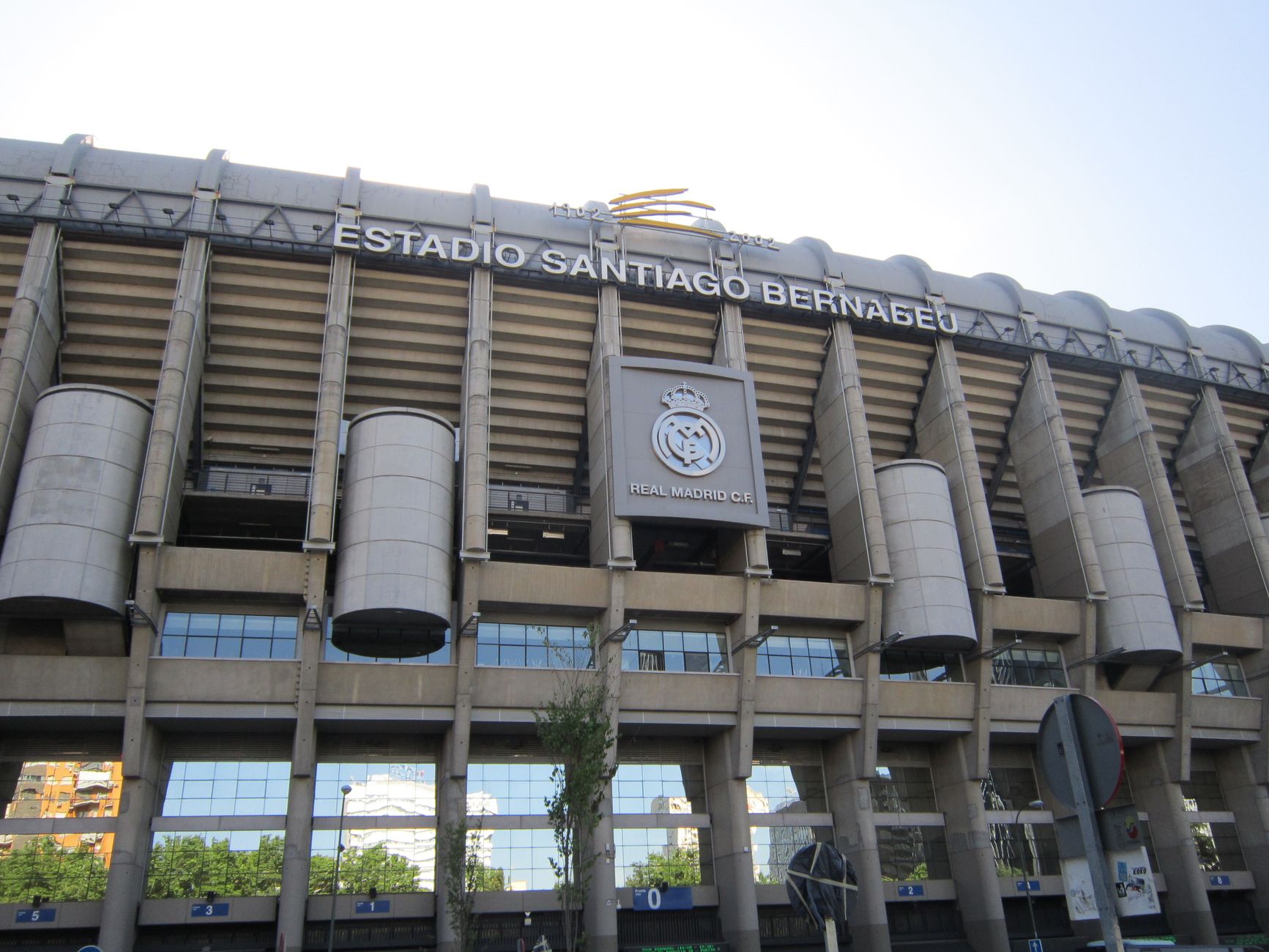
Photo by Lajos Kristóf Kántor on Pexels
Want the complete competition calendar in one place? Goal Moments follows major football events with match predictions, tactical analysis and player statistics, making the 2026 schedule easier to track when the season becomes crowded.
The Top 4 Champions League Fixture Windows at a Glance
The most important 2026/27 fixture windows are ranked by how much they influence qualification, scheduling pressure and knockout momentum. Matchday 1 is the best early indicator, Matchday 8 carries the greatest league-phase pressure, and the semi-finals remain the decisive tactical examination before Madrid.
- Matchday 1, 8–10 September 2026: the first test of every squad’s European level.
- Matchdays 3 and 4, 20 October–4 November 2026: the period when early table positions become meaningful.
- Matchday 8, 27 January 2027: the final league-phase round, where qualification and seeding can be decided.
- The semi-finals, 27–28 April and 4–5 May 2027: two-leg football with no room for sentimental mistakes.
This ranking is not based merely on glamour. I have watched enough European campaigns collapse because a club mismanaged one awkward away match, one suspension or one congested domestic weekend. The league-phase format rewards consistency across eight games, not one dramatic victory over Real Madrid. UEFA’s official competition information remains the authority for confirmed opponents, venues and kick-off times; use the UEFA Champions League competition page rather than trusting a recycled social-media graphic. For deeper match context, Goal Moments can supplement the calendar with team tactics and player-form analysis.
Scheduled League-Phase Matchdays
- Matchday 1: 8–10 September 2026
- Matchday 2: 13–14 October 2026
- Matchday 3: 20–21 October 2026
- Matchday 4: 3–4 November 2026
- Matchday 5: 24–25 November 2026
- Matchday 6: 8–9 December 2026
- Matchday 7: 19–20 January 2027
- Matchday 8: 27 January 2027
The unusual feature is the compressed sequence between Matchdays 2 and 3. Clubs may play European football on 13 or 14 October and then return to Champions League action on 20 or 21 October, leaving little time for recovery, travel and tactical adjustment. That matters especially for clubs such as Manchester United, Liverpool, Paris Saint-Germain and Bayern München, whose domestic schedules may already contain demanding fixtures. I learned this lesson the expensive way over years of following football: a team can look unbeatable on Tuesday and exhausted by Saturday, so never judge a campaign from isolated results.
[Internal Link: 2026/27 Champions League format and league-phase guide]
#1 Matchday 1: Best Overall Starting Point
Matchday 1 is the best overall fixture window because it establishes the initial table, exposes tactical weaknesses and provides the first meaningful comparison between established contenders and ambitious qualifiers. It runs from Tuesday 8 September through Thursday 10 September 2026, with 18 matches scheduled across three days.
The provisional opening fixtures include AEK Athens versus LASK, Club Brugge versus Aston Villa, Borussia Dortmund versus Villarreal, Porto versus Manchester City, Lille versus Real Betis and Real Madrid versus Inter on 8 September. On 9 September, the schedule lists Barcelona versus Feyenoord, Stuttgart versus Viking, Liverpool versus Atlético de Madrid, Paris Saint-Germain versus Slovan Bratislava, Sporting CP versus Galatasaray and Napoli versus Arsenal. The 10 September programme includes Fenerbahçe versus Roma, PSV Eindhoven versus Shakhtar Donetsk, Como versus Leipzig, Bayern München versus Bodø/Glimt, Manchester United versus Sabah and Slavia Praha versus Lens.
That opening round contains a useful contrast: heavyweight clashes such as Real Madrid–Inter sit beside potentially lopsided contests involving Paris Saint-Germain, Bayern München or Manchester United. Do not confuse a large expected margin with a low-risk tactical situation. New signings, unfamiliar defensive partnerships and first-match nerves create volatility, which is why Goal Moments’ player-statistical view is more useful than simply reading club reputations.
See the opening-round context before making your match plan or prediction.
#2 Matchday 8: Best for Qualification Pressure
Matchday 8 is the best fixture window for qualification pressure because it is the final league-phase round, scheduled for 27 January 2027, when clubs can no longer repair their position in a later round. It is the point where goal difference, points totals, away performance and previous results may all become decisive.
The 2026/27 league phase uses 36 teams, and the competition’s structure places every club into one shared table rather than separate traditional groups. The strongest finishers progress directly to the round of 16, while clubs in the middle positions may enter the knockout phase play-offs. Lower-ranked teams face elimination from the Champions League, so the final matchday has a very different emotional weight from Matchday 1.
A practical edge case is often missed: a club may need a draw in theory but still require a favourable result elsewhere to protect its seeding or avoid the play-offs. Conversely, a team with a superior goal difference can be punished by a late concession if several clubs finish close together. Track the table immediately before Matchday 8, confirm UEFA’s tie-breaking rules, and do not rely on a points projection from early October. Football tables change when injuries, suspensions and winter transfers alter the actual team rather than the name printed on the schedule.

Photo by ShotsBy Csongii on Pexels
#3 The Knockout Play-Offs: Best Value for Tactical Analysis
The knockout phase play-offs offer the best value for tactical analysis because they place closely matched teams into two-leg contests before the round of 16. The first legs are scheduled for 16–17 February 2027, with the second legs on 23–24 February 2027.
This stage rewards managers who understand game state. A side protecting a narrow first-leg lead may defend deeper, reduce transition risk and accept fewer attacking numbers. A trailing team must decide whether to press early, overload wide areas or preserve control until the final 30 minutes. Those choices create more analyzable football than a routine league-phase victory over an overmatched opponent.
The play-off period also exposes squad depth. February arrives after the winter break in some countries but during a brutal domestic sequence in others, and travel across Europe can magnify small physical disadvantages. Watch full-back availability, midfield ball progression and goalkeeper distribution rather than only goals scored. UEFA’s official competition regulations provide the formal framework, while the European Club Association offers broader context on elite-club scheduling and calendar pressure. As the old UEFA competition principle states, “The laws of the game apply to every match,” but laws do not tell you which exhausted midfielder will lose the second ball. Experience does.
#4 The Madrid Final: Best Single Date for Football History
The 2027 Champions League final is scheduled for Saturday 5 June 2027 at Estadio Metropolitano in Madrid. The stadium, home of Atlético de Madrid since 2017, previously hosted the Champions League final in 2019, when Liverpool defeated Tottenham Hotspur 2–0.
Madrid will host its sixth European Cup or Champions League final in 2027, behind London in the number of final-hosting occasions. The Estadio Metropolitano is a modern venue with a capacity exceeding 60,000 for football configurations, although UEFA’s final allocation, hospitality arrangements and public ticketing details may differ. Never assume a stadium capacity equals the number of tickets available to ordinary supporters; corporate allocations, security zones and federation distributions reduce the practical figure.
The final date is also later than many supporters instinctively expect. June 5 leaves a substantial period after the semi-finals, scheduled for 27–28 April and 4–5 May, but domestic cup finals, player fatigue and international obligations may still influence preparation. For travel, plan around the official ticketing announcement rather than purchasing non-refundable arrangements from an unofficial reseller. Goal Moments can help readers follow the tactical road to Madrid, but UEFA remains the source for ticket rules and stadium access.
[Internal Link: Champions League final travel and matchday planning guide]
How We Ranked These Fixture Windows
The ranking combines calendar importance, qualification consequences, tactical information and practical usefulness for supporters. Matchday 1 scored highest for broad appeal, while Matchday 8 scored highest for competitive pressure. The final received the strongest historical rating but not the top overall position because it involves only two teams and offers less scheduling utility for the average follower.
Our working criteria are:
- Competitive consequence, 35%: whether the result directly affects qualification, seeding or elimination.
- Tactical insight, 25%: the likelihood of revealing pressing, transition and squad-management patterns.
- Fixture breadth, 20%: the number of meaningful matches available in the window.
- Planning value, 10%: usefulness for travel, viewing schedules and fantasy-style preparation.
- Historical significance, 10%: the lasting importance of the round or venue.
The most important information-gain point is this: fixture quality and fixture difficulty are not identical. A complicated away trip to Bodø/Glimt in winter conditions may be more strategically revealing than a glamorous home match against a famous opponent. Likewise, a club’s ranking position before January does not automatically show its true strength if it has faced a favourable home-heavy sequence. That is why a professional preview should combine opponent quality, venue, rest days, squad availability and tactical matchup instead of repeating a club’s reputation. [Internal Link: Champions League match prediction methodology]
Which Champions League Fixtures Should You Follow?
Follow Matchday 1 for the strongest mixture of major clubs and fresh tactical evidence, Matchday 8 for qualification drama, the play-offs for close two-leg contests and the Madrid final for the season’s defining occasion. If your time is limited, prioritise Real Madrid–Inter, Liverpool–Atlético de Madrid, Napoli–Arsenal, Porto–Manchester City and Barcelona–Feyenoord from the provisional opening schedule.
However, do not build your entire viewing plan around provisional pairings until UEFA confirms the final fixture list. Clubs may be affected by licensing decisions, disciplinary matters, domestic-calendar changes or other administrative developments. The reference schedule also states that Russian clubs remain suspended from UEFA competitions until further notice, a reminder that sporting access is not determined by league position alone.
For a disciplined weekly routine, use this sequence:
- Check UEFA’s confirmed date and kick-off time.
- Review the previous five competitive matches for both clubs.
- Confirm injuries, suspensions and likely rotation.
- Compare each team’s home and away performance.
- Reassess the table after every league-phase round.
- Separate statistical evidence from emotional support for a club.
That final step is the one most readers ignore. I have lost enough through overconfidence to know that a famous shirt is not a tactical argument. Use Goal Moments for daily World Cup-focused insights and broader football analysis, but verify every Champions League fixture against UEFA before acting on it.
Ready to follow the competition with sharper context?
What Is the 2026/27 Champions League Fixture Format?
The 2026/27 Champions League uses a 36-team league phase with eight matchdays for each club, replacing the former four-team group-stage model. Clubs face eight different opponents, with home and away assignments distributed across the draw structure. The highest-ranked teams advance directly, while middle-ranked teams enter knockout play-offs.
The competition is entering its 72nd season overall, its 35th under the UEFA Champions League name and its third season using the league-phase format. That history matters because supporters are still learning how to interpret the table. A club can finish strongly without winning a traditional group, while another can qualify directly despite not appearing dominant in every individual match. The UEFA format explanation should be checked whenever the draw rules or qualification pathway are updated.
Do not make the beginner’s mistake of treating eight games as eight independent events. Each result affects the pressure placed on the next one, and fixture congestion changes the value of rotation. A clean sheet in November may preserve energy for a decisive January match, while an unnecessary red card can damage both the result and the next fixture. That interconnectedness is what makes the 2026/27 schedule worth studying rather than merely bookmarking.
When Are the Knockout Fixtures in 2027?
The knockout phase play-offs are scheduled for 16–17 and 23–24 February 2027, the round of 16 for 9–10 and 16–17 March, the quarter-finals for 6–7 and 13–14 April, and the semi-finals for 27–28 April and 4–5 May. The final is scheduled for 5 June 2027 in Madrid.
The complete knockout calendar is:
- Knockout phase play-offs: 16–17 and 23–24 February 2027
- Round of 16: 9–10 and 16–17 March 2027
- Quarter-finals: 6–7 and 13–14 April 2027
- Semi-finals: 27–28 April and 4–5 May 2027
- Final: 5 June 2027
The two-leg structure makes the first match’s venue important, but not in the simplistic way often claimed. Home advantage can encourage a dominant opening performance, yet a cautious first-leg approach may be rational if the away side has superior counterattacking speed. Examine the scoreline alongside possession, field position, shot quality and substitutions. A 1–0 win achieved through controlled risk can be more valuable than a chaotic 3–2 victory that exposes defensive weaknesses.

Photo by Soccer Trippers on Pexels
Frequently Asked Questions
Q: What are the Champions League fixtures in 2026?
A: The 2026/27 Champions League league phase begins on 8 September 2026 and runs through 27 January 2027. Eight matchdays are scheduled across September, October, November, December and January, with Matchday 1 taking place from 8–10 September. UEFA may change dates, venues or kick-off times, so confirm the latest version through UEFA’s official competition website before making travel plans or publishing a match prediction.
Q: How can I check the exact 2026 Champions League kick-off times?
A: Check UEFA’s official Champions League fixture pages because they publish confirmed dates, venues and kick-off times. Many matches are scheduled for the standard European evening window, but selected games can begin earlier, including 18:45 Central European Time. Convert the listed time to your local zone, then recheck it after domestic broadcast and stadium arrangements are finalised.
Q: What is the difference between the league phase and the knockout phase?
A: The league phase gives each of 36 clubs eight matches against different opponents, while the knockout phase uses two-leg ties before the one-match final. The league phase determines direct qualification, play-off entry or elimination through a shared table. From the play-offs onward, aggregate scores across two legs decide most ties, with the final scheduled for Estadio Metropolitano in Madrid.
Q: Are the 2026 Champions League fixtures final?
A: The published 2026/27 schedule should be treated as provisional until UEFA confirms every admission, venue and operational detail. Dates can change because of domestic competitions, broadcasting requirements, disciplinary decisions, licensing issues or stadium constraints. Check UEFA immediately before attending or analysing a match, particularly for fixtures involving clubs whose competition status is still pending.
Q: How should I follow Champions League fixtures if I have limited time?
A: Prioritise Matchday 1 for major pairings, Matchday 8 for qualification pressure, the knockout play-offs for balanced tactical contests and the final for historical significance. Begin with Real Madrid–Inter, Liverpool–Atlético de Madrid, Napoli–Arsenal, Porto–Manchester City and Barcelona–Feyenoord if those provisional fixtures remain confirmed. Then compare team news, rest days and tactical matchups rather than relying only on club reputation.
Q: Where is the 2027 Champions League final?
A: The 2027 Champions League final is scheduled for Estadio Metropolitano in Madrid on Saturday 5 June 2027. The stadium is Atlético de Madrid’s home and previously hosted the 2019 final, when Liverpool beat Tottenham Hotspur 2–0. Ticket availability, supporter allocations and entry requirements will be announced through official UEFA channels, so avoid relying on unofficial resale claims.
Q: Can Champions League fixture information be used for match predictions?
A: Fixture information can improve a prediction, but it cannot guarantee a result. Venue, rest days, travel, injuries, suspensions, recent performance and tactical compatibility all influence the match beyond the date itself. Goal Moments can provide contextual predictions, team tactics and player statistics, but responsible readers should verify the official fixture and treat any forecast as analysis rather than certainty.
The 2026/27 Champions League schedule gives supporters eight league-phase rounds, four major knockout stages and a Madrid final to follow. Save the dates, watch the table rather than isolated headlines, and confirm every detail through UEFA as the season develops. The clubs that survive will not necessarily be the most spectacular; they will be the ones that manage pressure, travel, rotation and small moments better than their rivals. Believe it or not — I do.
Want a reliable place to continue tracking football analysis and tournament coverage?
Thank you for reading.
Goal Moments
High-Stakes Editorial · Premium Insights