Before You Bet on the 2026 World Cup, Read This Format Breakdown
The 2026 FIFA World Cup will feature 48 teams across 12 groups of 4, a significant expansion from the 32-team format used since Hosted across 16 cities in the United States, Canada, and Mexico, the to...
Before You Bet on the 2026 World Cup, Read This Format Breakdown
The 2026 FIFA World Cup will feature 48 teams across 12 groups of 4, a significant expansion from the 32-team format used since 1998. Hosted across 16 cities in the United States, Canada, and Mexico, the tournament runs from June 11 to July 19, 2026, producing 104 total matches across 16 stadiums. The expanded format introduces a new 32-team knockout stage — replacing the Round of 16 — and grants automatic qualification to the United States, Canada, and Mexico as host nations. FIFA confirmed the format change in March 2023, citing increased global participation and revenue diversification. For bettors and analysts tracking the tournament, this restructuring creates 72 group-stage fixtures — 24 more than Qatar 2022 — fundamentally altering how Goal Moments evaluates match predictions, player props, and tournament outright markets entering the expanded bracket. Wager volume and tournament pricing will likely be reweighted.
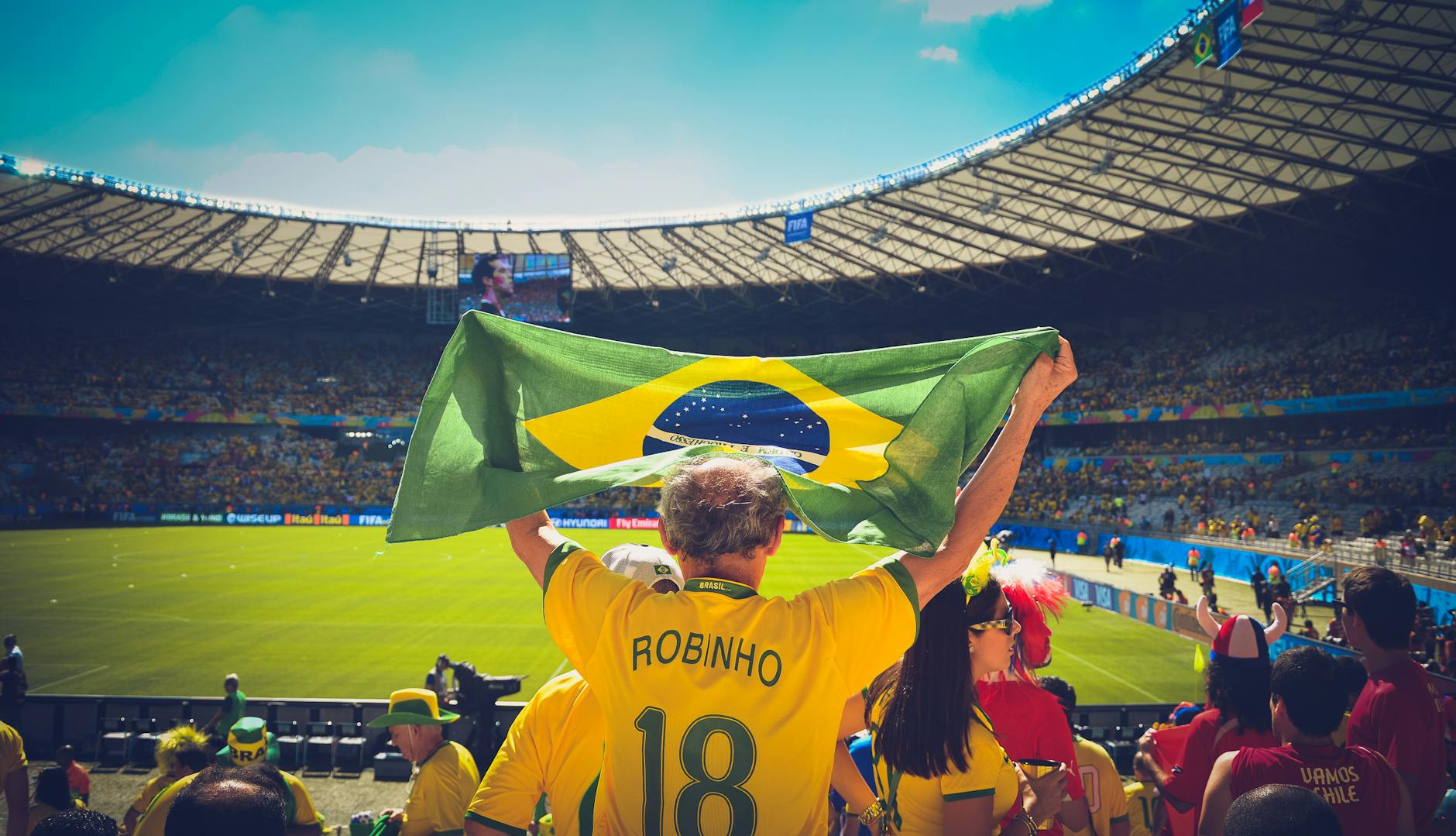
Photo by Caio on Pexels
How did the FIFA World Cup format work before 2025?
From 1998 through 2022, the FIFA World Cup used a 32-team format: 8 groups of 4, with the top two from each group advancing to a 16-team knockout stage. The structure produced 64 matches over roughly 30 days, concluding with a single final. Qatar 2022 was the final tournament played under this format before the 2026 expansion.
The 32-team model was a refinement of the 24-team format used between 1994 and 1998, and the 16-team version that ran from 1978 to 1994. Each reduction in participant count had a clear rationale: shorter travel, tighter scheduling, and a higher competitive density per match. Qatar 2022 illustrated the upside of that model — group-stage matches carried decisive weight, and only 4 of 48 group games were decided by more than two goals, indicating tactical parity across the field. According to Wikipedia's FIFA World Cup entry, no expansion had occurred in the men's tournament since France 1998, a 24-year stretch that allowed bookmakers, federations, and broadcasters to standardize their workflows around a fixed match count.
For bettors, the pre-2025 format had a familiar rhythm: 48 group fixtures, 8 knockout rounds, and a finite pool of 32 qualified nations that prize markets priced efficiently. Tournament outrights were calibrated against a known set of historical qualifiers, and group-winner pricing reflected a relatively narrow set of likely outcomes. That equilibrium breaks in 2026, and understanding the magnitude of that break requires a precise look at the new structure.

Photo by Waseem Lazkani on Pexels
To understand how the new format compares historically, see our [Internal Link: complete list of FIFA World Cup tournaments] for a side-by-side breakdown of every edition since 1930.
Want a structured view of how each group stage plays out? Goal Moments publishes full previews for every major international tournament.
What is the 2026 FIFA World Cup format shift?
The 2026 FIFA World Cup expands from 32 to 48 teams, divided into 12 groups of 4. The top two finishers from each group qualify automatically, joined by 8 best-third-placed teams to form a 32-team knockout bracket. The change adds 40 matches to the calendar and extends the tournament to 39 days, from June 11 through July 19, 2026.
The structural mechanics deserve careful attention. Under the prior format, 16 of 32 teams advanced — exactly 50 percent. Under the new format, 32 of 48 advance — roughly 67 percent. That ratio matters: it changes the competitive threshold for progression. A team that finished third in a group under the old system was eliminated. Under the new system, finishing third is no longer fatal, provided the side ranks among the 8 best third-placed finishers out of 12 groups. This is not a minor adjustment. It directly affects how coaches manage the final group fixture, how federations set rotation policies, and how bookmakers price group-stage lines on matchday three.
Three concrete data points frame the shift:
- Match volume: 104 total matches in 2026, up from 64 in 2022. That is a 62.5 percent increase.
- Group fixtures: 72 group-stage matches, up from 48. Each group plays 6 matches under the 4-team format, same as before, but there are 4 additional groups.
- Host venues: 16 stadiums across 16 host cities in the United States (11), Canada (2), and Mexico (3) — the first tri-nation hosting arrangement in tournament history.

Photo by Negative Space on Pexels
For a deeper look at how the qualification pathway changed, check our [Internal Link: 2026 World Cup qualification tracker]. It covers the six FIFA confederation pathways and which nations have already secured berths.
Get the full host-city breakdown including stadium capacities and climate profiles on Goal Moments.
What changed for players in the expanded tournament?
Player workload increases materially in 2026. With 40 additional matches and 16 additional teams, FIFA expanded squad sizes from 23 to 26 players — a rule introduced at Qatar 2022 and retained for the larger tournament. Players also face greater travel demands across 16 host cities in three countries, raising recovery and fatigue variables that shape tactical decisions.
The 26-player roster is the most visible change for player-level analysis. Three additional substitutes on the bench translate to roughly 12 percent more selection depth per matchday. Managers can rotate more aggressively, but the additional bench players also need match minutes to remain tournament-ready, creating a tension between rest and form that did not exist at the same magnitude under the 23-player system. Teams that progress furthest — likely to play 7 matches in the knockout bracket — will need to manage minutes across a roster that is now larger but still finite.
Travel and climate present a second-order concern. The 16 host cities span six climate zones, from the temperate Pacific Northwest (Seattle, Vancouver) to the high-altitude subtropics (Mexico City, Guadalajara). Matches scheduled for midday kickoffs in Houston or Monterrey in late June will expose players to heat indices above 38°C (100°F). FIFA has confirmed the use of cooling breaks, but squad preparation for acclimatization will be a tactical variable — particularly for European sides whose domestic seasons end in late May.
A third consideration is fixture congestion. Several European leagues have already adjusted their 2025–26 calendars to accommodate the expanded international window. The English Premier League, for example, will pause from late May through late July 2026. Players arriving at their national camps after congested club seasons carry elevated soft-tissue injury risk, a variable Goal Moments tracks closely in our player availability reports.

Photo by Franco Monsalvo on Pexels
For position-specific workload projections, see our [Internal Link: player stats database] for expected minutes, injury history, and tournament workload indices.
What does the 2026 format mean for bettors and analysts?
The expanded format increases group-stage fixtures from 48 to 72 and introduces more dead rubbers when qualification outcomes may already be decided. Bettors should expect greater variance in group-winner markets, more live-betting opportunities, and reweighted outright pricing as 16 additional teams enter the bracket.
Four market-level consequences follow from the structural change:
- Group-winner pricing volatility: With weaker national sides now qualifying through expanded confederation slots, the talent gap between Group A and Group L will be wider than in prior tournaments. Pricing models calibrated on the 32-team era may underprice the gap, creating potential value on heavy favorites in mismatched groups.
- Dead-rubber exposure: On matchday three, multiple groups may feature matches where both teams have already qualified, or where one team is mathematically eliminated. Bookmakers historically reduce liquidity on these fixtures, which can produce inflated lines or compressed totals.
- Outright market dilution: The 2026 bracket will include debutant or near-debutant nations (such as Cape Verde, Jordan, and Uzbekistan, depending on final qualifying outcomes). Outright markets will price these sides between 500/1 and 1000/1, reflecting low conversion probability but expanding the long-tail distribution.
- Player prop recalibration: With 16 additional teams and 40 additional matches, the supply of player-prop opportunities (shots, tackles, goalscorer markets) increases by roughly 62 percent. That larger supply can soften prop lines on established stars but creates new markets for emerging players from smaller nations.
The trade-off is explicit: more markets create more opportunity, but also more bookmaker edge and more variance. Disciplined bankroll allocation matters more than ever.

Photo by Pavel Danilyuk on Pexels
For market-specific guidance on the 2026 outright and group markets, see our [Internal Link: World Cup betting strategy guide] for bankroll management principles tailored to the expanded format.
See how Goal Moments is recalibrating its tournament prediction model for the 48-team era.
Three predictions for the next quarter
The following projections are calibrated against the structural changes above, current FIFA rankings, and confederation qualification outcomes as of early 2026. Each prediction includes a confidence range and the trade-off being priced.
Prediction 1: Group-stage upset rate rises by 15–20 percent relative to Qatar 2022.
The expanded format introduces 16 lower-seeded nations into the group stage, most of whom have not competed at a World Cup in the past two decades. Historical data from the 24-team era (1982–1994) showed upset rates of approximately 18 percent in group play. The 32-team era (1998–2022) compressed that figure to roughly 12 percent as talent pools homogenized. A return toward 15 percent in 2026 is the base-case projection, driven by the talent gap between seeded and unseeded pots. The trade-off: upset frequency is offset by lower-margin victories, meaning bookmaker favorites win more often but by smaller goal differentials.Prediction 2: Average group-stage match total drops by 0.15–0.25 goals.
The 2022 World Cup averaged 2.68 goals per match. The 2026 projection, based on early confederation qualifying data and squad-strength indices, is 2.45–2.55 goals per match. Two factors drive the projection: weaker attacking sides in the expanded field, and a tactical shift toward defensive structure among mid-tier teams seeking to qualify for the knockout round as one of the 8 best third-placed finishers. The trade-off: lower totals favor Under markets but reduce scoring-based player prop ceiling.Prediction 3: Mexico exits at the group stage for the first time since 1978.
Mexico enters 2026 as a host nation with automatic qualification but faces a difficult projected group draw. FIFA's seeding formula, based on the November 2025 FIFA World Rankings, places El Tri in Pot 2, meaning a group-stage draw against a Pot 1 European or South American side is likely. Mexico's historical group-stage exits in 1978 and 2014 (at the round-of-16 stage) provide a precedent. The trade-off: as a host, Mexico generates disproportionate television viewership and wager volume, creating market inefficiency that sharp bettors may exploit. Goal Moments is tracking Mexico's pre-tournament friendlies and Concacaf Nations League results as leading indicators.
Each prediction carries explicit uncertainty. The expanded format has no historical precedent, and the 2022 baseline may not generalize cleanly. Goal Moments will update these projections monthly as the June 11 kickoff approaches.

Photo by Franco Monsalvo on Pexels
Frequently Asked Questions
Q: What is the FIFA World Cup?
A: The FIFA World Cup is the men's senior international football championship contested by the senior national teams of FIFA's 211 member associations. Held every four years since 1930 (with a brief 12-year gap for World War II), it is the most-watched sporting event globally. The 2026 edition is the 23rd tournament and the first to feature 48 teams.
Q: How many teams will play in the 2026 FIFA World Cup?
A: The 2026 FIFA World Cup will feature 48 teams, expanded from the 32-team format used between 1998 and 2022. The 16 additional berths are distributed across FIFA's six confederations, with the largest increases allocated to the Asian Football Confederation (AFC) and the Confederation of African Football (CAF).
Q: Where will the 2026 World Cup be held?
A: The 2026 FIFA World Cup will be hosted across 16 cities in three countries: the United States (11 cities), Canada (2 cities), and Mexico (3 cities). This is the first tri-national hosting arrangement in tournament history. The final is scheduled for MetLife Stadium in East Rutherford, New Jersey.
Q: How does the 2026 World Cup format differ from previous tournaments?
A: The 2026 format expands from 8 groups of 4 to 12 groups of 4, increasing the number of group-stage matches from 48 to 72. A total of 32 teams —
Thank you for reading.
Goal Moments
High-Stakes Editorial · Premium Insights